What Is an Enterprise AI Gateway? The Definitive Guide [2026]
AI Gateway Guide: What is an enterprise AI gateway and why can't traditional API gateways handle AI traffic? The definitive guide to multi-provider routing, cost governance, semantic caching, and evaluation criteria.


An enterprise AI gateway is a specialized infrastructure layer that sits between your applications and AI model providers — including OpenAI, Anthropic, Google, Meta, and any self-hosted models — to route, govern, secure, and optimize every AI request across your organization. Unlike traditional API gateways, an enterprise AI gateway handles token-based billing, prompt validation, compliance enforcement, semantic caching, and multi-provider failover in a single control plane.
As organizations move from AI experimentation to production at scale, the enterprise AI gateway has become the foundational infrastructure layer for responsible, cost-effective AI deployment. According to Gartner, over 80% of enterprises will deploy generative AI by 2026 — and without centralized governance, the result is shadow AI, uncontrolled costs, and compliance exposure.
Why Enterprises Need an AI Gateway
Enterprise AI adoption creates five infrastructure challenges that a dedicated AI gateway solves:
1. Multi-Provider Management
Most enterprises today use three or more LLM providers simultaneously. Development teams use OpenAI for code generation, marketing uses Anthropic for content, and data science runs Meta's Llama for internal analysis. Without a gateway, each integration requires separate authentication, separate billing, and separate security controls. An enterprise AI gateway provides a single API endpoint that routes to any provider based on policy, cost, latency, or data sensitivity requirements.
2. Cost Governance
AI costs are the fastest-growing line item in enterprise IT budgets. A single runaway workflow can consume thousands of dollars in API costs in hours. Enterprise AI gateways introduce token-level budget controls, team-level spending limits, and semantic caching that can reduce token spend by 50–80%. LangSmart's Smartflow MetaCache, for example, achieves up to 80% token cost reduction through intelligent deduplication of redundant requests across teams.
3. Security and Compliance
Every AI request is a potential data leak. Enterprise AI gateways inspect prompts for sensitive data (PII, PHI, trade secrets), enforce content policies, and maintain complete audit trails for regulatory compliance. With the EU AI Act's August 2026 deadline approaching and SEC scrutiny increasing, the ability to prove AI governance at the network layer is becoming a legal requirement, not a best practice.
4. Performance and Reliability
Production AI systems need sub-second response times, automatic failover, and load balancing across providers. If OpenAI goes down, your customer-facing application shouldn't. Enterprise AI gateways handle provider failover transparently, route requests to the lowest-latency endpoint, and serve cached responses when appropriate.
5. Agent and MCP Governance
As AI agents begin using tools via the Model Context Protocol (MCP) and communicating via Google's Agent-to-Agent (A2A) protocol, the governance surface area expands exponentially. Enterprise AI gateways that govern LLM traffic today must also govern MCP tool access and A2A inter-agent communication tomorrow. LangSmart's Smartflow 1.3 is the only platform that governs all three protocols in a single control plane.
Enterprise AI Gateway vs. Traditional API Gateway
A common question is whether an existing API gateway (Kong, Apigee, AWS API Gateway) can handle AI traffic. The short answer: not adequately.
| Capability | Traditional API Gateway | Enterprise AI Gateway |
|---|---|---|
| Billing Model | Request-based | Token-based with per-model pricing |
| Security | Rate limiting, API key auth | Prompt injection detection, PII filtering, content policy |
| Caching | Exact-match HTTP caching | Semantic caching (similar prompts return cached responses) |
| Routing | URL/header-based | Content-aware: route by sensitivity, cost, latency, jurisdiction |
| Compliance | Access logs | Full prompt/response audit trail with policy enforcement |
| Protocol Support | HTTP/REST/gRPC | HTTP + MCP + A2A + streaming |
| Failover | Health-check based | Cross-provider model failover with automatic rerouting |
How to Evaluate Enterprise AI Gateways
When evaluating enterprise AI gateway solutions, consider these criteria:
| Criterion | What to Look For | Why It Matters |
|---|---|---|
| Deployment Model | On-premise, private cloud, hybrid options | Regulated industries require data to stay on-network |
| Latency Overhead | Sub-millisecond or zero added latency | Any latency added to every AI request compounds at scale |
| Provider Coverage | All major providers + self-hosted models | Enterprises use multiple providers and switch frequently |
| Protocol Support | LLM APIs + MCP + A2A | Agent governance is the next requirement |
| Caching Intelligence | Semantic (not just exact-match) | Exact-match cache hit rates are under 5% for AI traffic |
| Compliance Reporting | Pre-built reports for EU AI Act, HIPAA, SEC | Manual compliance reporting doesn't scale |
| Integration Effort | Single API endpoint change, no code rewrites | 12-month migrations kill adoption |
Enterprise AI Gateway Architecture
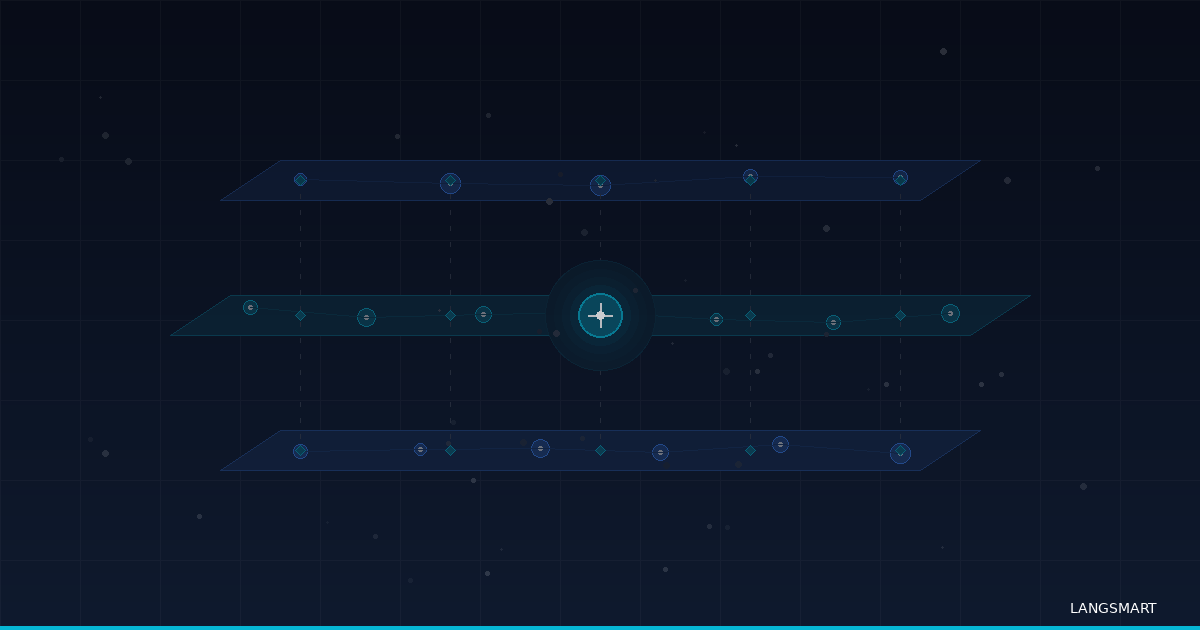
The recommended architecture places the enterprise AI gateway between your application layer and all AI providers. All AI traffic — whether from internal applications, customer-facing products, or autonomous agents — flows through the gateway, which enforces security policies, applies caching, routes to the optimal provider, and logs every interaction for audit.
A typical deployment includes:
- Application layer sending requests via a single API endpoint
- The AI gateway handling authentication, policy enforcement, and routing
- MetaCache layer checking for semantically similar cached responses
- Provider routing based on cost, latency, jurisdiction, or sensitivity rules
- Response logging and audit trail to a governance dashboard
Frequently Asked Questions
What is an enterprise AI gateway?
An enterprise AI gateway is infrastructure that sits between your applications and AI model providers to route, govern, secure, and optimize every AI request. It handles multi-provider management, cost governance, compliance enforcement, and performance optimization in a single control plane.
How is an AI gateway different from an API gateway?
Traditional API gateways handle HTTP request routing and authentication. Enterprise AI gateways add AI-specific capabilities: token-based billing, prompt injection detection, semantic caching, PII filtering, multi-model routing based on cost and sensitivity, and protocol support for MCP and A2A.
Do I need an on-premise AI gateway?
If you operate in a regulated industry (financial services, healthcare, government, defense), on-premise deployment ensures that sensitive data never leaves your network. Cloud-only AI gateways send your prompts and responses through third-party infrastructure, creating compliance risks under HIPAA, SEC, EU AI Act, and data residency requirements.
How much does an enterprise AI gateway reduce AI costs?
Semantic caching can reduce token spend by 50–80% by serving cached responses to semantically similar requests. LangSmart's MetaCache achieves up to 80% reduction with 95% cache hit rates, while also improving response latency by up to 4x.
Which AI providers does an enterprise AI gateway support?
Leading enterprise AI gateways support all major providers: OpenAI, Anthropic, Google (Gemini), Meta (Llama), Mistral, AWS Bedrock, Azure OpenAI, DeepSeek, and any OpenAI-compatible API. Provider-agnostic gateways like LangSmart Smartflow enable instant provider switching without application code changes.
Craig Alberino is the CEO and Founder of LangSmart, which provides Smartflow — the enterprise AI gateway, firewall, and control plane for Fortune 500 companies. Learn more about Smartflow →